
Kitaplar
Turkish Private Law
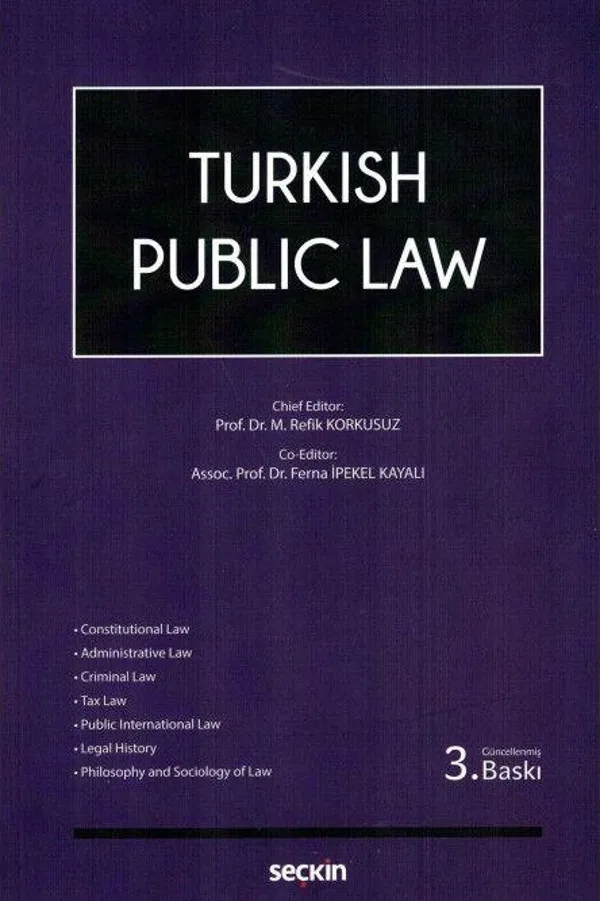
Turkish Public Law
Türk Ticaret Kanunu'na Göre Sermaye Ortaklıklarının Bölünmesi
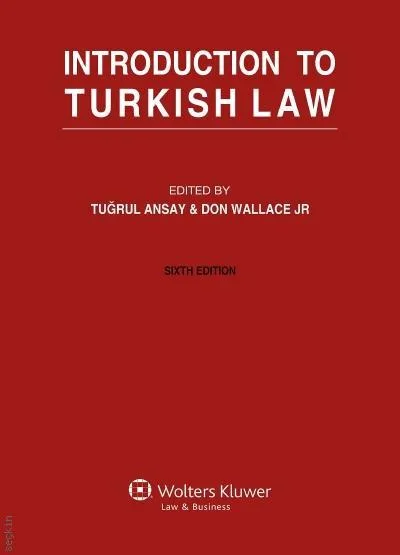
Introduction To Turkish Law
Türk Ticaret Kanunu'na Göre Birleşmeler
Öne Çıkan Alıntılar
“In the West, secularism has meant complete separation of religion and the state. The Kemalist conception of secularism, however, has allowed for some measure of state control over religion. It was feared that total non-interference between religion and the state would, in fact, result in the interference of religion in governmental affairs, since Islam is perceived not only as a system of faith but also a system of law, a social and political ideology, and a total way of life.”
“In 1963 the core of rule of law was defined by the Turkish Constitutional Court as: - A State that respects human rights and establishes a just order of law whereby these rights are protected and maintained. - All acts, actions and functions of such a state must be in conformity with law and the Constitution and are subject to judicial review. In a State bound by the principle of the rule of law, the law absolutely prevails over all institutions of the State, including the Legislature.”
“...three elements absolutely essential to the rule of law: (a) judicial control of the legality of administrative acts; (b) judicial control of the constitutionality of laws and (c) the independence of the judiciary.”
“...three elements absolutely essential to the rule of law: (a) judicial control of the legality of administrative acts; (b) judicial control of the constitutionality of laws and (c) the independence of the judiciary.”
“...three elements absolutely essential to the rule of law: (a) judicial control of the legality of administrative acts; (b) judicial control of the constitutionality of laws and (c) the independence of the judiciary.”